Joel and Ethan, the Coen brothers, are a two-headed writing and directing behemoth that has made 20 films since 1984, and while not all of them hold together perfectly, they all have much to recommend them. And when they’re good, they’re very good indeed.
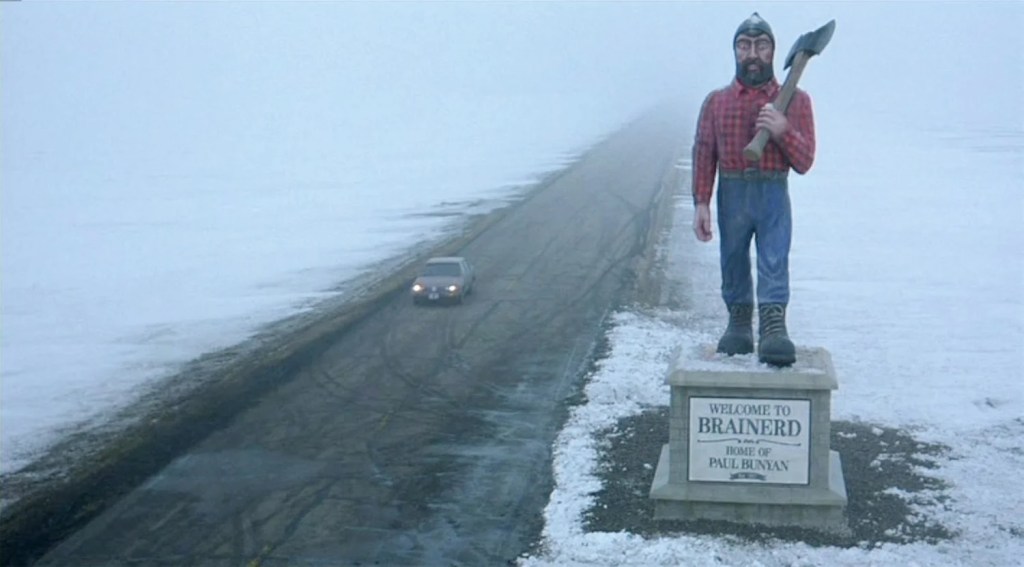
The Coens share a deep love of the rhythms and patterns of American dialects, the music from folk to blues to jazz, and the rich landscape and culture and history. All their films are set in America and never the same place twice. Some directors prefer to focus on a particular locale (Woody Allen in New York City, for example), the Coens are as comfortable setting their stories in 1930s New York or or cold war Hollywood or the Arizona desert in the 1980s or the California competitive amateur bowling scene. And many of their films, Fargo included, are celebrations of the small-town podunk authenticity of a fantasy idea of America. Even when the Coens are writing about some truly heinous people, there is something genuinely affectionate in the portraits they create.
They’re also as at home writing original material as adapting the work of others (from Cormac McCarthy to Homer) or remaking existing properties (including the Ealing Comedy The Lady Killers and the John Wayne classic True Grit). They tell grand, sweeping epics like Miller’s Crossing and Hail Caesar and small, quiet dramas like A Serious Man. I said when we watched His Girl Friday that no one makes screwball comedies any more, yet the Coens made two extremely memorable, if not very successful, ones in the 90s. They’re comfortable with everything from noir to satire to thriller – and with both True Grit and No Country for Old Men they’re the only filmmakers to make any successful westerns since Clint Eastwood made Unforgiven.

They’ve worked with heavyweight stars from Albert Finney to Juliette Moore to Tom Hanks, but time and again they come back to a pretty reliable stable of character actors, many of whom helped make Fargo the film that put the Coens on the map. And this is a story about how they met one of them.
After getting a Masters in theatre at Yale university, Frances McDormand moved to New York to try and make it in showbiz. She moved in with another young actor named Holly Hunter, who one day brought home news of two weird guys in town who were having an open casting for their debut movie. The two went along to audition, McDormand got the part and she and Joel Coen married not long afterwards. The movie, Blood Simple, was not a massive success, but it was popular with critics and art students, and became a cult movie on video and on the movie marathon circuit. It also got them the attention of some very talented, established actors – crucially not stars, but character players – who formed a sort of repertory company of performers on whom they’d draw repeatedly over the years. These include McDormand, John Goodman, Tim Blake Nelson, John Turturro (whom we saw recently in Do the Right Thing), Holly Hunter, Steve Buscemi and William H Macy. (Since the early 2000s, George Clooney, acting against suave type and leaning hard into the silliness, has also been part of the troupe.)
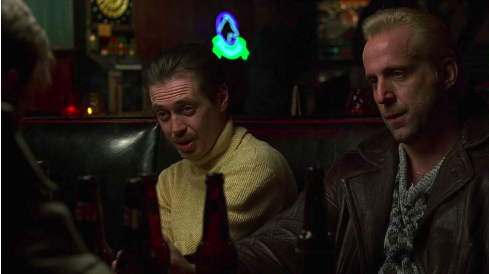
Minnesota car salesman Jerry Lundegaard, a born loser, is in desperate need of money. He hires two morons to stage his wife’s kidnapping so he can extort money from her wealthy father. From the moment we meet Jerry, we can see his plan’s destined to fail. He’s an hour late to meet his hired goons. He can’t get anything right. And he’s a cowardly man committing a crime for personal gain. Yet to the enormous credit of everyone involved, as an audience we can’t help empathising with the hopeless schlub. Macy wasn’t originally cast in the role – Bill Pullman had turned it down and the Coens turned from LA to New York to try casting it there. Macy followed them to New York, crashed the audition and demanded that they cast him. “And if you don’t,” he told them, “I’ll kill your dog.”
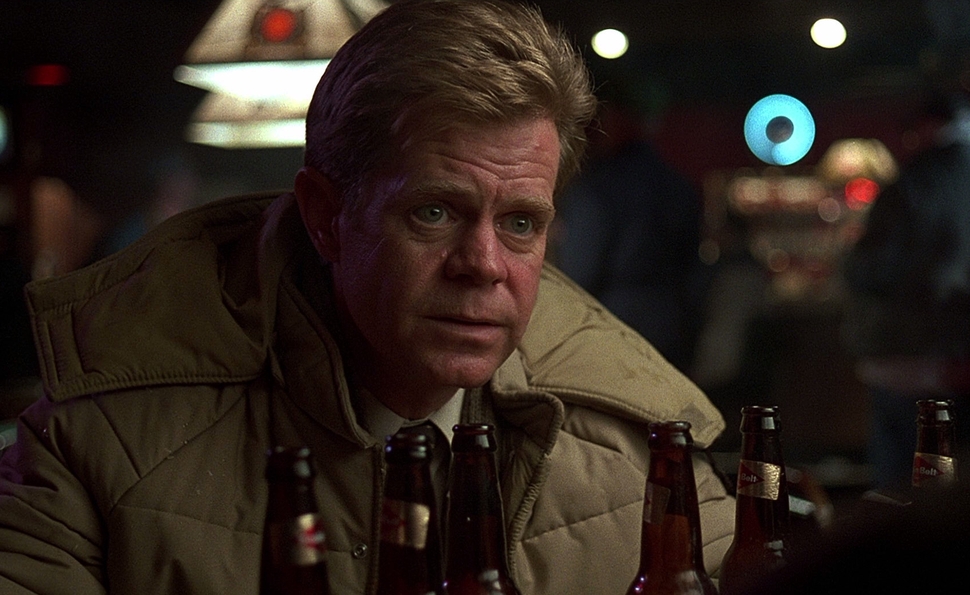
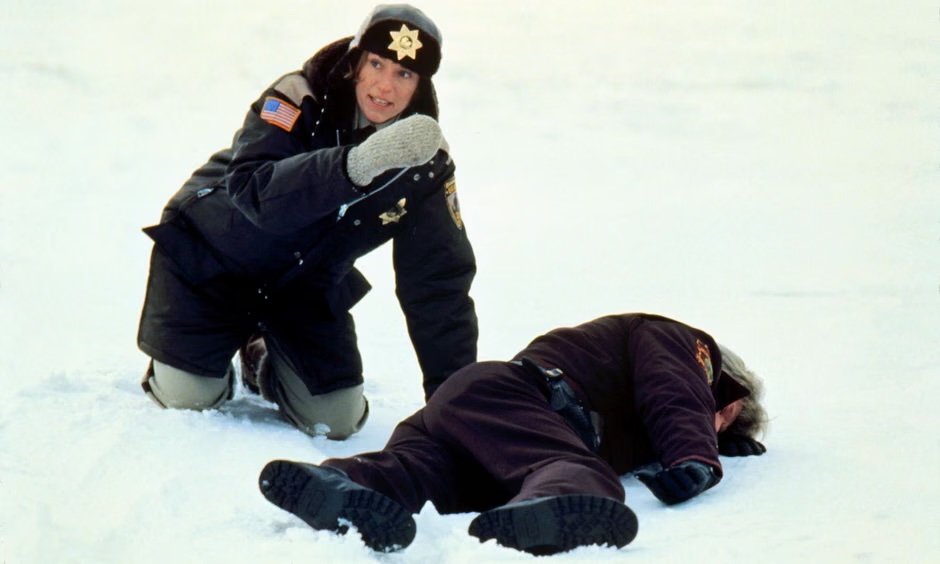
The film is full of these perfectly rounded character sketches like Jerry Lundegaard. Any person who appears on screen has been scripted, dressed, cast and directed with such care that they sort of glow – whether with kindness, menace or something else. But absolutely the best of them all is our protagonist, Marge Gunderson.
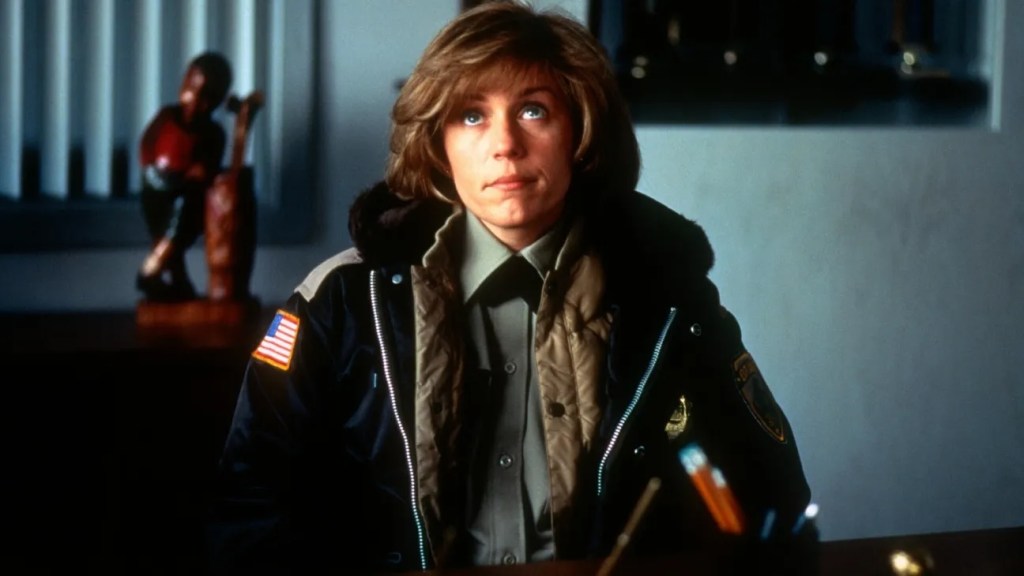
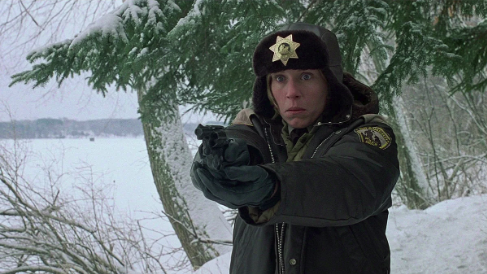
If Thelma and Louise showed Hollywood that women over 35 could be badass action heroes and people would pay to see it (Susan and Geena marched so that Charlize could run, one might say); Fargo demonstrated that they could also be quirky, comic yet deceptively brilliant. Marge Gunderson runs a case like Peter Faulk’s Columbo – seemingly down-home and bumbling but actually dangerous as hell.
In the hands of another actress, particularly someone cast principally for their comedic chops, Marge Gunderson could have been too quirky, not sharp enough, but McDormand plays her so straight – and with such kindness – that she is completely authentic and three-dimensional. And she is the beating heart of the film, despite being completely absent from it for the first half hour.
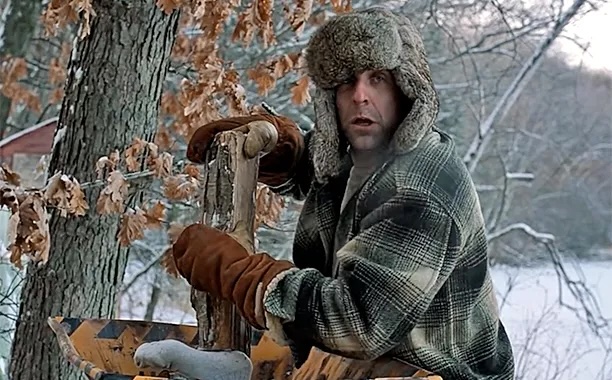
To my knowledge, she’s also the only character who has ever been pregnant in a film without that being a plot point. Marge just happens to be pregnant – a fact on which the film never once capitalises – not to build dramatic tension, not to idealise her or make her vulnerable or sympathetic or feminine, not to give Norm an excuse to make a dramatic dash for the hospital as her waters break. She just is pregnant. And I don’t think people realise how utterly groundbreaking that is. It’s like Hitchcock having Janet Leigh flush a toilet in Psycho, which we’ll get to in October – unremarked upon, completely incidental, yet quietly revolutionary. (Of course, Hitchcock was also getting a dig in at the censors, but that just makes him him.)
Very occasionally, if an actor is very much in demand or cannot be recast and is heavily pregnant, the writers will write that into the script somehow. But this actor was not pregnant at the time of shooting. Marge was written like that just because. McDormand wore a fake pregnancy belly and silicon breasts. On one particularly cold Minnesota day she left the breast plate behind in her trailer overnight and they froze. During filming the next day, one of them exploded.
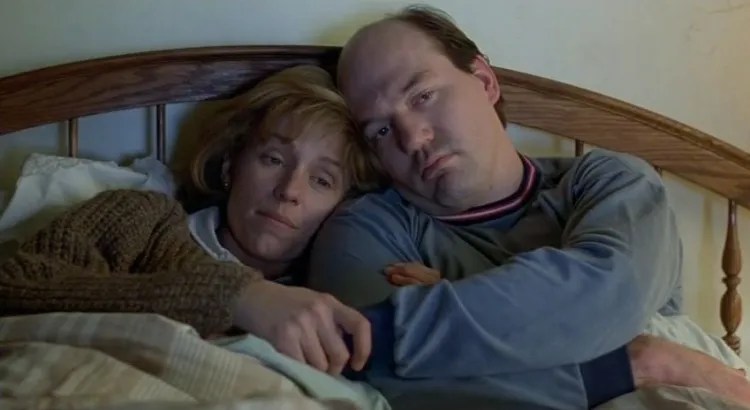
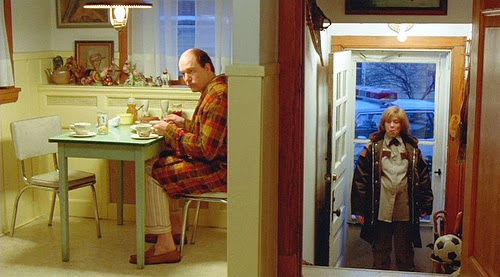
The Coens asked McDormand and John Carroll Lynch, who plays her husband Norm, to come up with a backstory as to how Norm and Marge met. They decided the two had worked together on the police force and when they got pregnant they decided one of them should quit to be a stay-at-home parent. Because Marge was a much better cop than Norm, he became the domestic partner and took up painting as a hobby. The film so clearly marks them out as having it all – not much in the way of material possessions but the kind of marriage in which both feel safe, supported and cared for. When we see the two of them on screen together, they’re never separate – they are always in a two-shot. And they’re always either eating or lying down – sometimes both.
The Bechdel Test was devised by the cartoonist Alison Bechdel and a friend. While discussing movies, they pondered over how there could be so many women in film, but so few films about women’s lives. The Bechdel Test is a set of three questions you can ask about every narrative fiction film. Think of your favourite movie, something you’ve seen at least once.
Question 1. Are there two or more named women characters?
Question 2. Do two or more of these women have a conversation during the film’s runtime?
Question 3. Is that conversation about something other than one of the male characters?
It’s quite shocking once you apply that lens to the average movie, because so few films do pass. This is not supposed to be a “test” of whether the film is any good, or worthy, or enjoyable – some, if not most, of the greatest films in history fail the Bechdel Test – it’s intended to be a framework for thinking differently about film.
Interestingly, Fargo doesn’t pass the Bechdel Test. But I’d classify it as a feminist film anyway.
 Not Lost For Words
Leave a comment